
Vintage Brass Bullock Cart Figurine or Dhokra Art Tribal Bull Cart
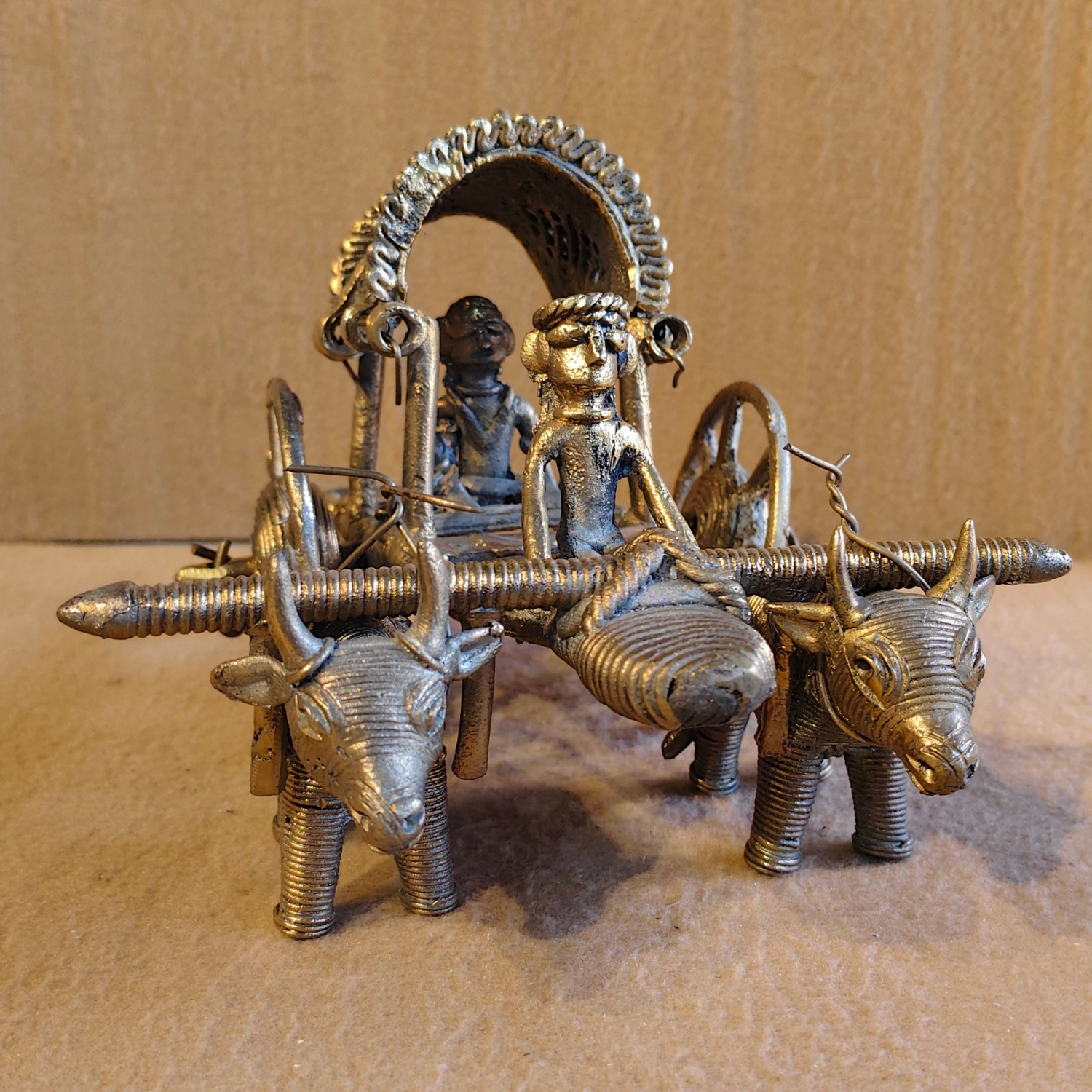
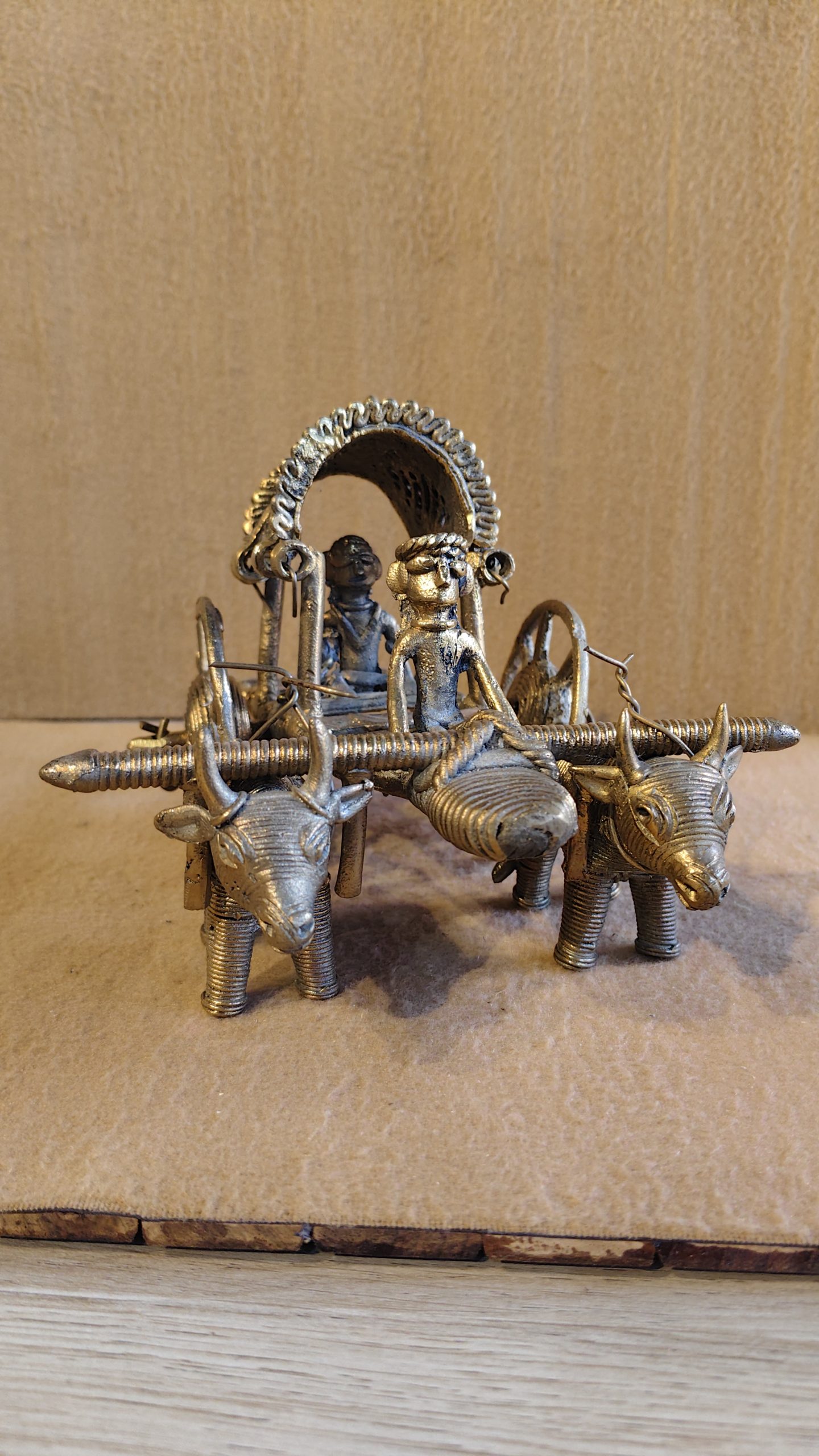
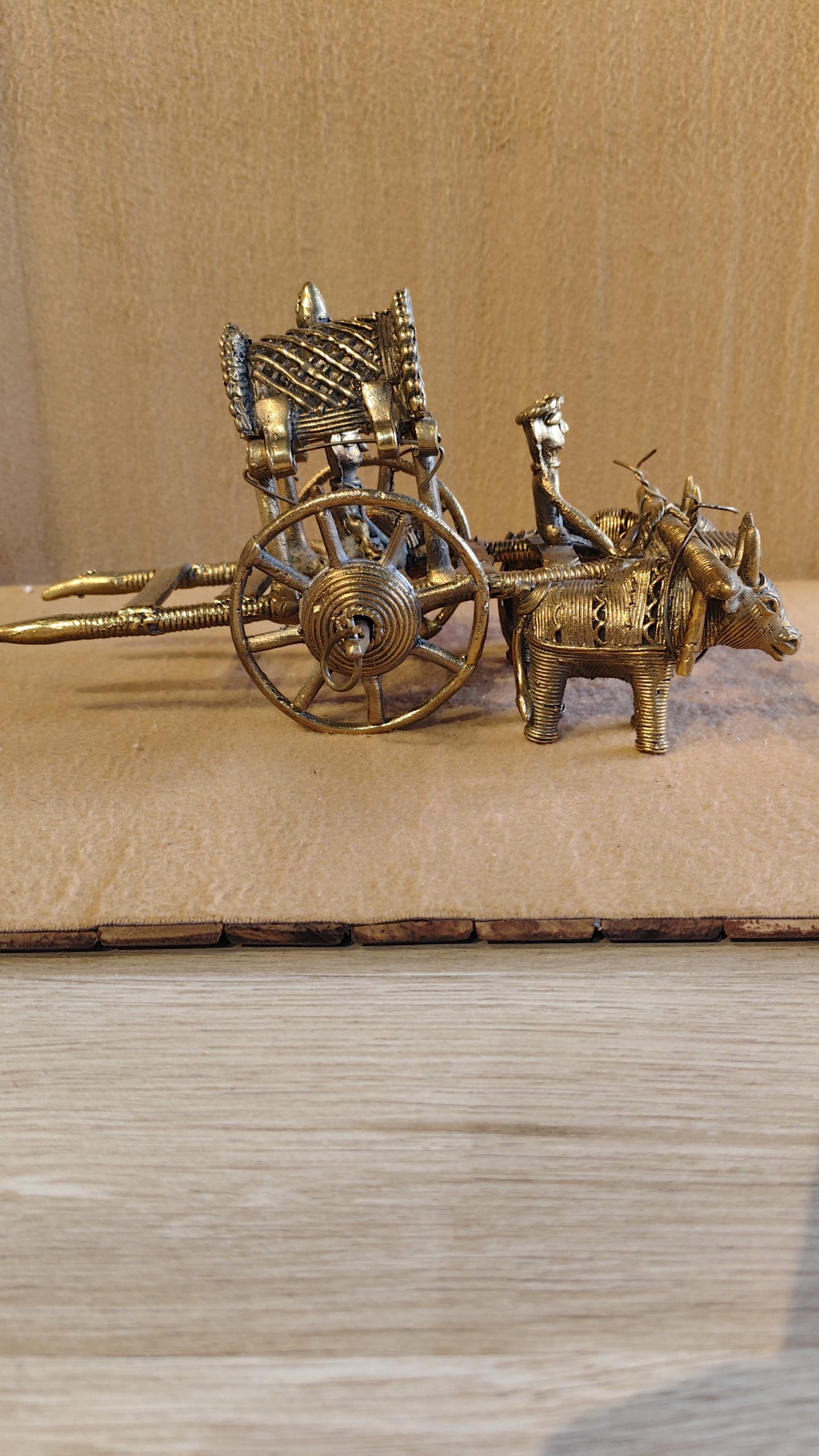
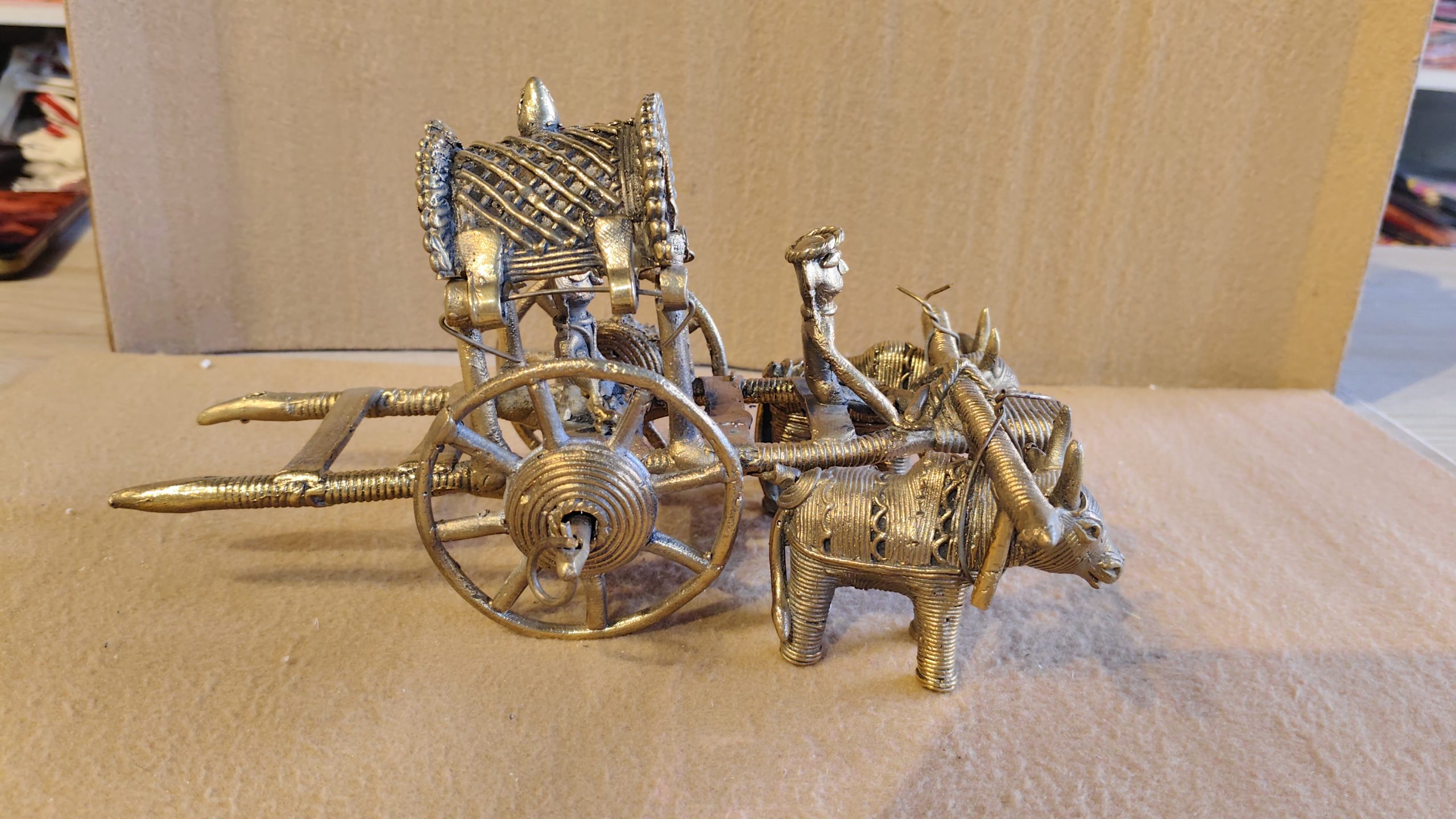
Vintage Brass Bullock Cart Figurine or Dhokra Art Tribal Bull Cart
Key Features
- Material: Metal alloy, typically brass, bronze, or a mixture of metals, crafted using the lost-wax casting (cire perdue) technique. The raw, unpolished finish is characteristic of this art form.
- Art Form: This is an excellent example of Dhokra art, characterized by the use of coiled and twisted metal wires to form the intricate shapes of the figures and the cart.
- Subject: A traditional bullock cart (bailgadi) with two bulls and two seated human figures. This subject matter is common in Indian folk art and represents rural life and heritage.
- Craftsmanship: The piece is entirely handmade, and the imperfections are part of its charm. The details on the bulls, the figures, and the cart’s canopy are meticulously crafted from fine wires. The wheels of the cart are also detailed and look sturdy.
- Aesthetics: It has a rustic, tribal, and antique feel. It’s not just a decoration but a piece of cultural heritage. It would be a great addition to a collection of ethnic art, or a decorative accent in a rustic or bohemian-themed home.
- Use: Primarily a decorative item, suitable for display on shelves, desks, or in cabinets to add an element of traditional Indian art.
This is a traditional folk art figurine depicting a bullock cart, likely made using the lost-wax casting technique, often referred to as Dhokra art. This form of metal craft is prominent in the states of Odisha, West Bengal, and Chhattisgarh in India. The piece showcases a two-wheeled cart pulled by a pair of bulls. The intricate details of the figures, the cart, and the bulls are created from twisted and coiled metal wires, a signature style of Dhokra art. The cart carries two human figures, one driving the cart and another seated behind. The entire piece has a rustic, handcrafted appearance with a deep, aged patina. It is a purely decorative item, representing rural life and traditional transportation.
Related products
-
Sale!
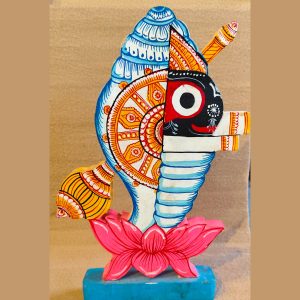
“Divine Fusion” – Handcrafted Pattachitra Shankha & Jagannath Showpiece
Original price was: ₹1,200.00.₹1,000.00Current price is: ₹1,000.00. -
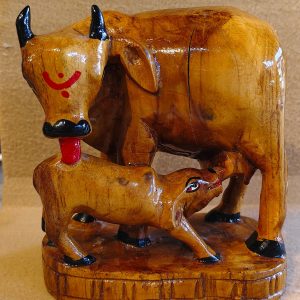
Hand-Carved Wooden Cow and Calf Sculpture
-
Sale!
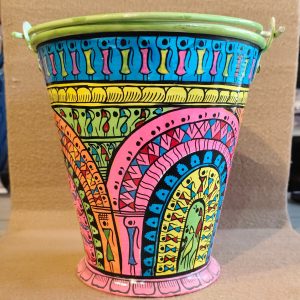
Hand-Painted Warli and Folk Art Decorative Bucket
Original price was: ₹1,170.00.₹999.00Current price is: ₹999.00. -
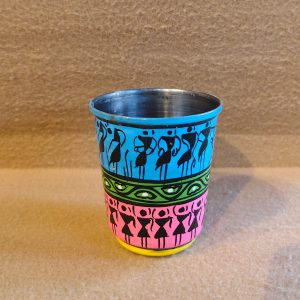
Warli Art Hand-Painted Metal Tumbler