
Vintage Brass Elephant Rider Lamp or Dhokra Art Ceremonial Elephant Figurine
Vintage Brass Elephant Rider Lamp or Dhokra Art Ceremonial Elephant Figurine
Key Features
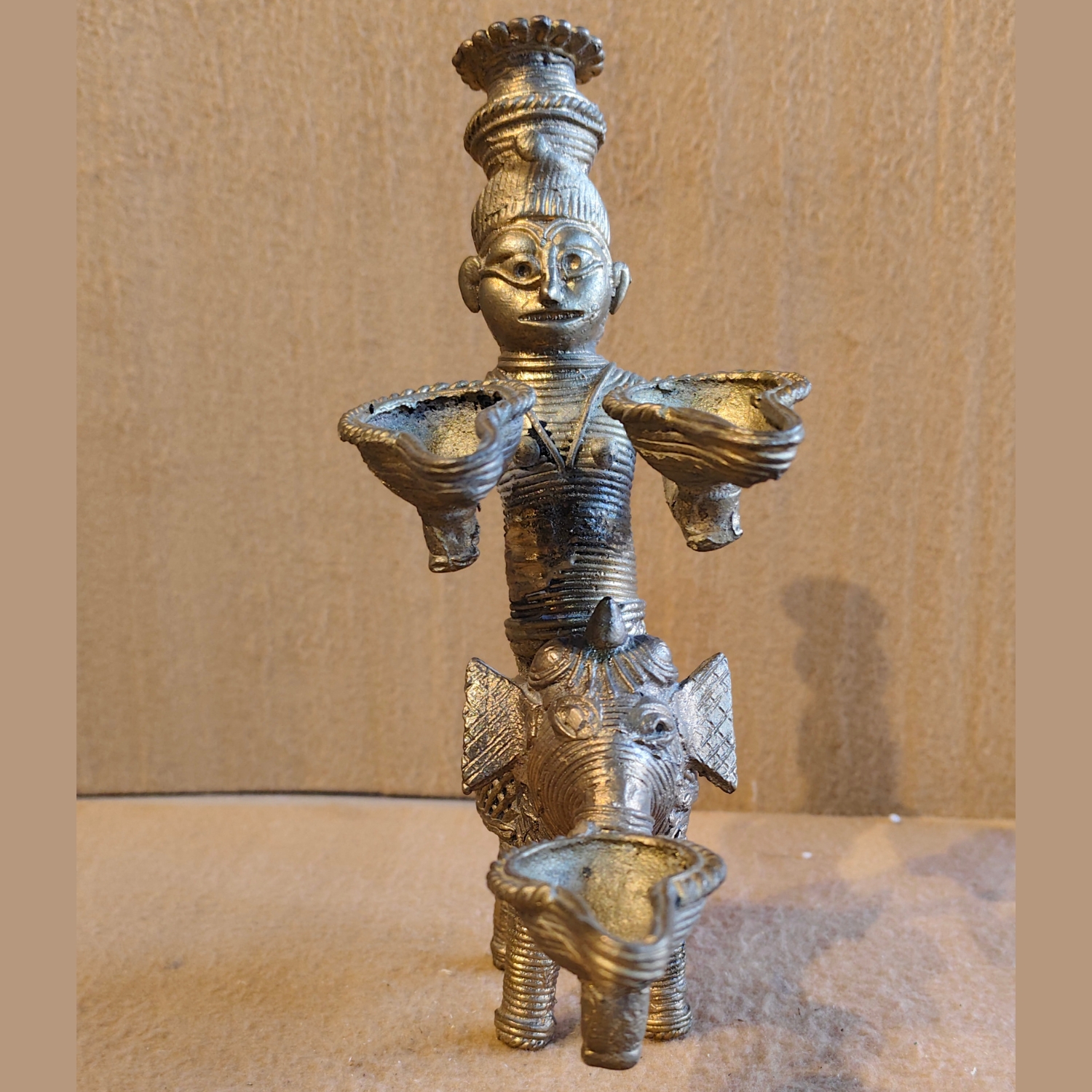
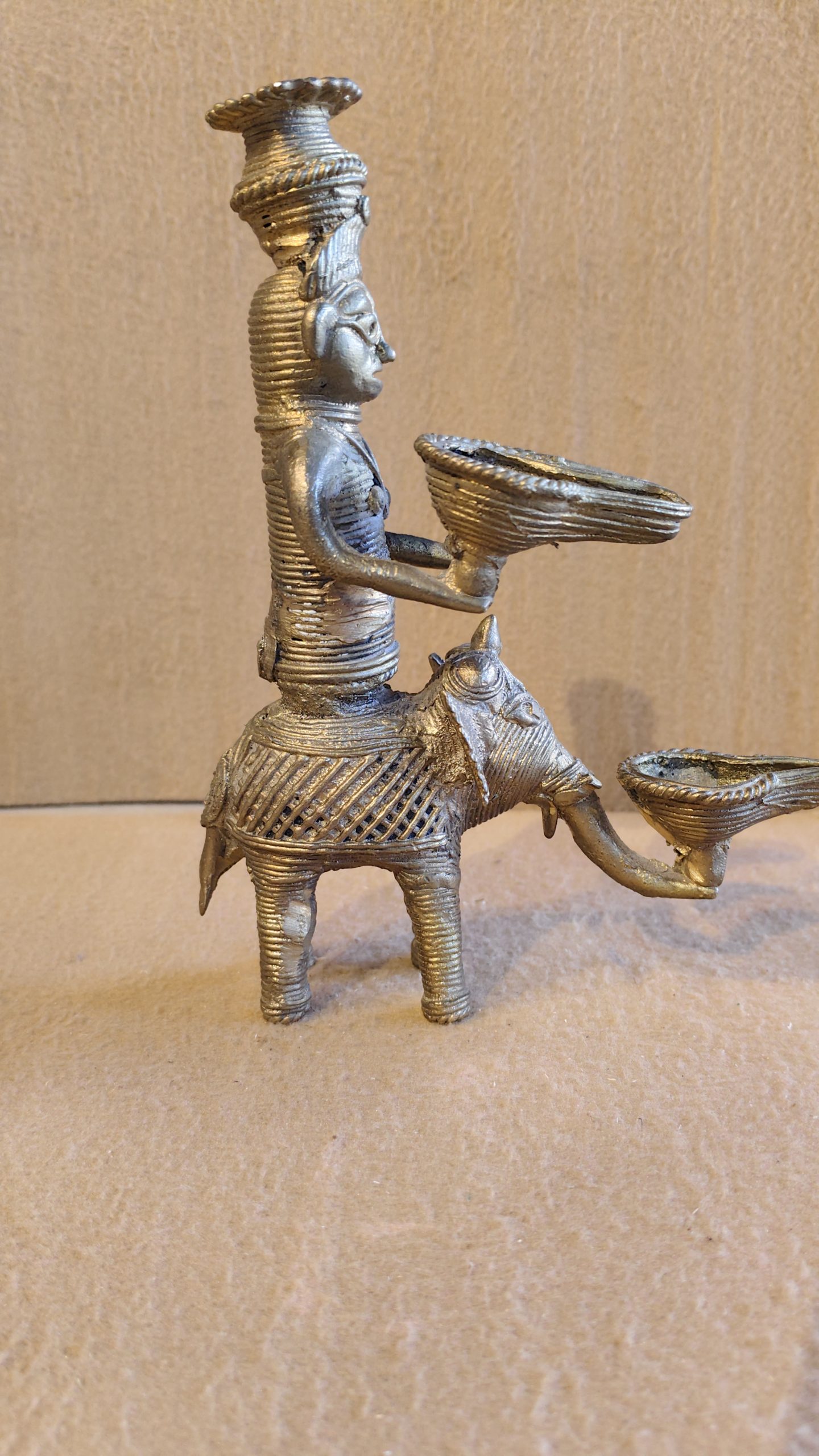
- Material: Crafted from a metal alloy (most likely brass or bronze) using the lost-wax casting (cire perdue) method, a hallmark of Dhokra art. This gives the piece a rustic, handcrafted appearance with an aged patina.
- Subject: A traditional depiction of an elephant with a rider. In Indian culture, the elephant symbolizes strength, wisdom, and good fortune, often associated with deities like Ganesha and royalty.
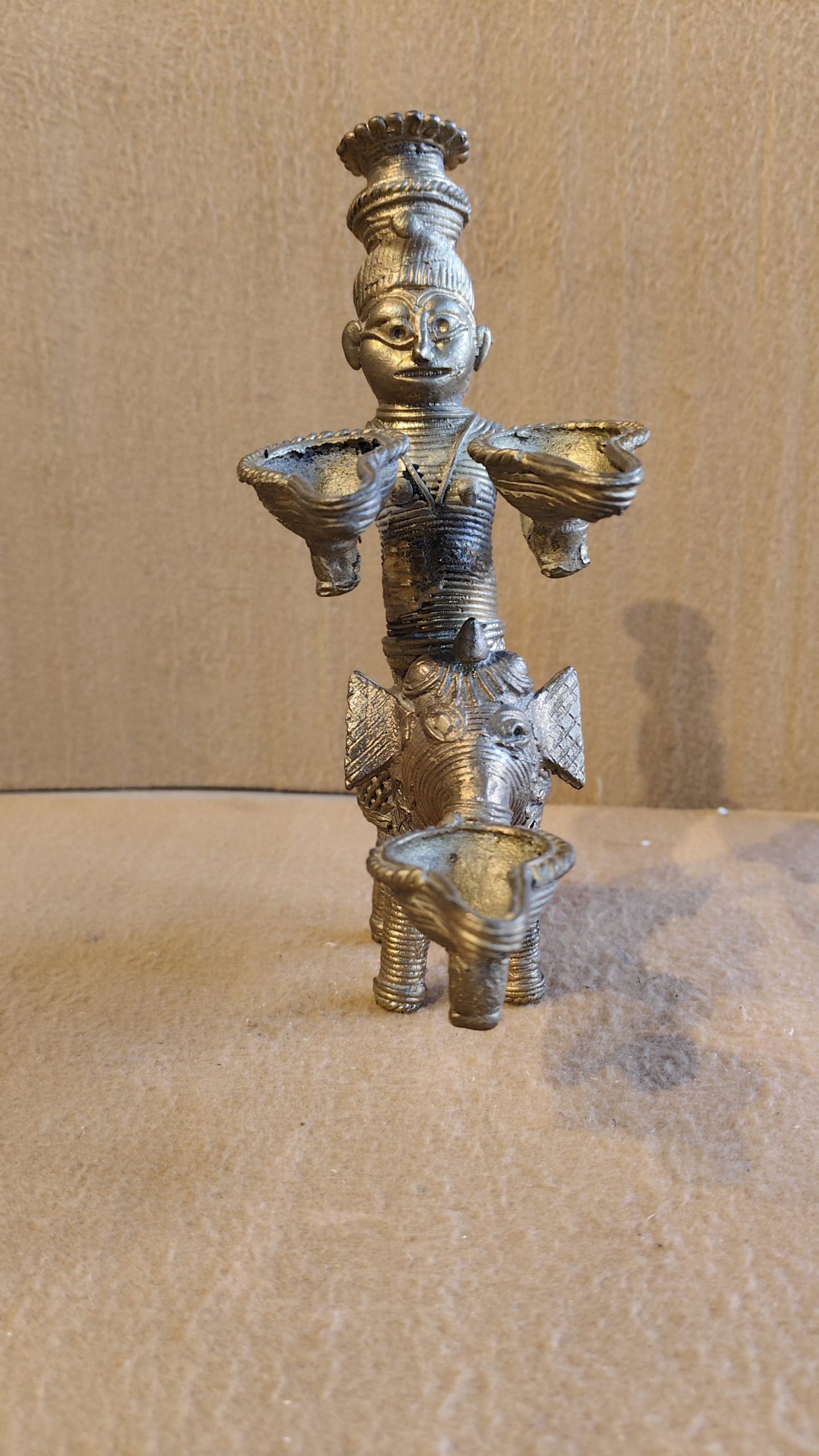
- Functionality: The small bowls or containers make it a functional oil lamp (diya). It can be used for spiritual rituals or as a decorative item that holds tea light candles or other small items.
- Art Form: The figure’s body is formed from meticulously coiled metal wires, a key characteristic of Dhokra art. The entire piece showcases the raw, unpolished, and intricate nature of this tribal craft.
- Aesthetics: The piece has a tribal, vintage, and rustic aesthetic. The combination of the human figure, the elephant, and the functional lamp bowls makes it a unique and culturally significant decorative item.
- Use: This figurine can be a focal point on a spiritual altar, a centerpiece for a festival, or a decorative accent in a home that celebrates traditional and ethnic art.
This is an intricate and functional figurine crafted from metal, likely a brass alloy, using the traditional lost-wax casting technique known as Dhokra art. The piece depicts a stylized elephant with a rider on its back. The elephant has a hollow, lattice-like body and is adorned with various patterns. The human figure is a tribal-style person with a large headpiece.
The most distinctive feature is the series of small, bowl-like containers attached to the figurine—one held by the rider and another protruding from the elephant’s trunk. These bowls strongly suggest that the item is a ceremonial oil lamp (diya) or a stand for holding wicks and oil. It is not just a decorative item but a piece of religious or spiritual significance, often used during festivals and rituals.
Related products
-
Handcrafted Wooden Painted Owl Figurine – Vibrant Indian Folk Art
-
Sale!
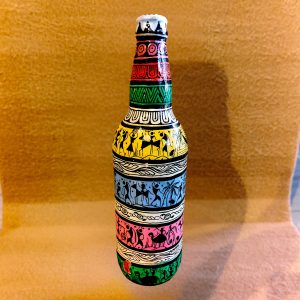
Hand-Painted Decorative Bottle – Tribal Warli Art Theme
Original price was: ₹400.00.₹299.00Current price is: ₹299.00. -
Sale!
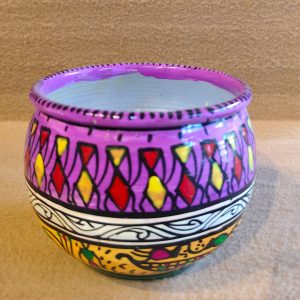
Geometric Pattern Terracotta Bowl
Original price was: ₹660.00.₹550.00Current price is: ₹550.00. -
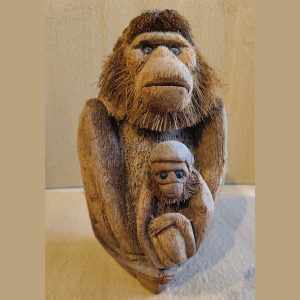
Hand-Carved Coconut Shell Monkey & Baby Figurine
₹3,500.00